Dear James: We are replacing carpeting with hardwood flooring ourselves. I prefer using the glue-down methods than just nailing it. Is this a good option for us? — Jonathan O.
Dear Jonathan: Even though people often assume installing a hardwood floor is above their do-it-yourself abilities, a glue-down tongue-and-groove floor is fairly simple to install. The materials for a glue-down floor cost more than for standard hardwood, but with you providing the labor, the overall cost is substantially less than having one professionally installed.
You should use prefinished hardwood for a glue-down floor. It is laminated, similar to plywood, to provide strength while still being thin. It is usually only 3/8- or 1/2-inch thick, so the transition to adjacent room flooring will be easier to handle.
Since the prefinished hardwood is thin, it has only a 1/16- to 1/8-inch thick veneer of real hardwood on it. With just this thin veneer, there is little material to allow you to sand and refinish it, so have your children treat it with care.
When you visit the home center store, make sure to look at the actual flooring, not just a photo of it on the box. It may look quite different than the packaging indicates. Boxes typically contain 20 to 30 square feet of hardwood. Purchase about 5% more than the area of your dining room.
Once you select the color and graining you want, consider the edge treatment. It is often available with straight flush-fit edges, beveled edges and rounded edges. Flush-fit edges can create an uncomfortable sharp edge if some of the pieces are thicker than others. Beveled edges create a V-groove which you may or may not like. Most people find slightly rounded edges to be a good compromise.
Remove the baseboards with a pry bar. Place a piece of wood between the pry bar and the wall so as not to damage it. With the carpeting removed, drag a long straight edge across the floor to check it for flatness. Use a belt sander to remove any high spots and wood filler to level low areas.
Generally, it looks best to run the hardwood parallel to the longest wall in the room. Snap a chalk line to use as your reference to start laying the flooring. If any doors swing into the room, remove them and trim some off the bottom to provide clearance over the new hardwood.
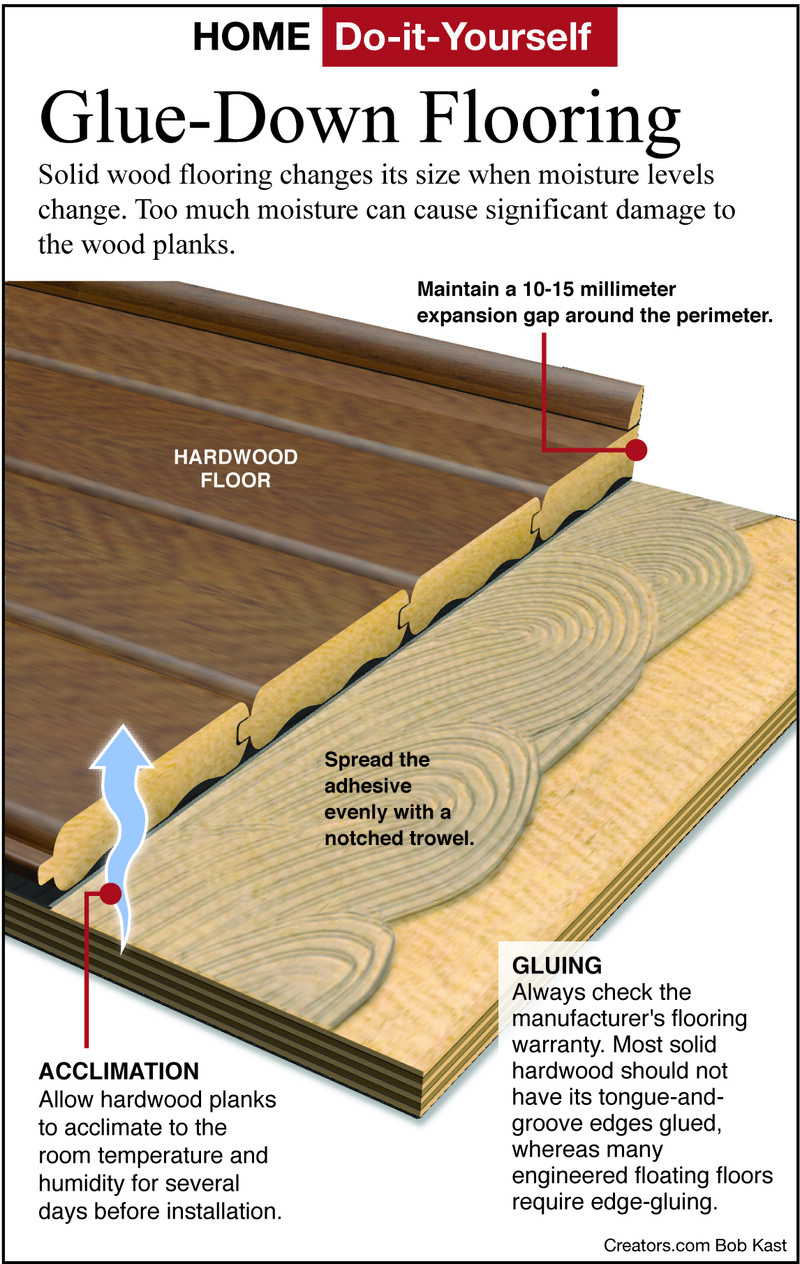
Carefully read the application instructions on the can of mastic. There may be a waiting period for the mastic to set up a little before you place the hardwood on it. Spread the mastic over the subfloor with a notched trowel.
Install the flooring in sections, leaving the final section by the door. Since this is your first time, don't spread more than 60 square feet at a time. Place the first row of hardwood along the chalk line. Temporarily tack it in place through the groove with finishing nails.
Lay the rest of the hardwood pieces, tapping them together lightly with a hammer. When the floor is complete, let the mastic set for 24 hours before walking on it.







View Comments