Q: I have a large garden area, and now that I have some grandkids, I was thinking of growing a huge pumpkin. What do you think? Is it as easy as I think it is?
A: Well, maybe. Halloween and pie pumpkins are easy to grow. Giant pumpkins (Cucurbita maxima) are not the same species as Halloween pumpkins (Cucurbita pepo). They cannot cross-pollinate with them because they are two different species. Giant pumpkins can cross-pollinate with winter squashes, which are also Cucurbita maxima.
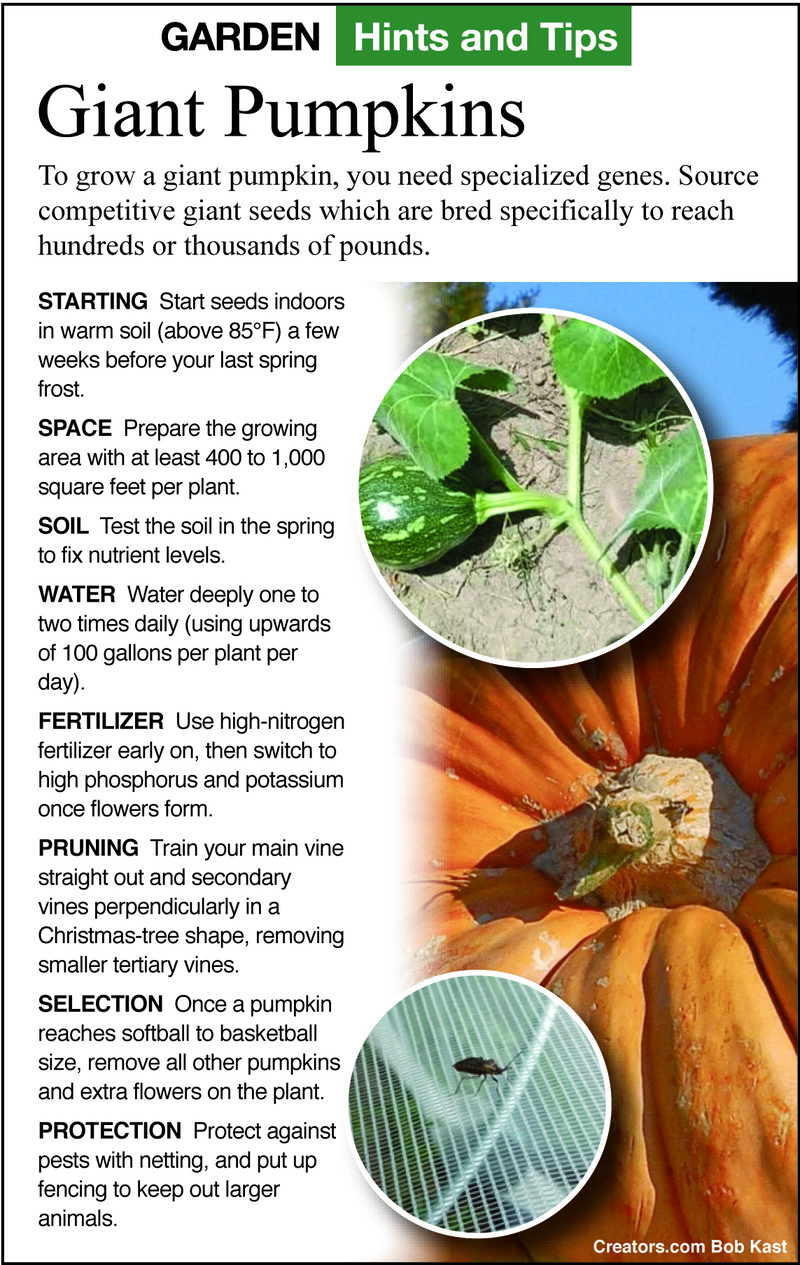
As I am sure you know, pumpkins grow on vines. Each giant pumpkin will require a minimum of 400 square feet of space, but 1,000 square feet in full sun is better. A nearby water source is required.
You may want to start out small to begin with, say in the 200-300 pound range. Many seed sources sell Atlantic Giant, Big Max, Prizewinner and Wyatt's Wonder. Larger pumpkin seed sources may be available from organizations that are centered around growing giant pumpkins. All of the largest pumpkins in recent years have come from Dill's Atlantic Giant seeds. Seeds may be $5 to $20 each, but seeds from an actual giant, prizewinning pumpkin can be over $1,000 each. You will want five to 10 seeds so that you can keep the best vine or two out of all the seeds that actually start growing.
Start the seeds indoors a month before they will be planted outdoors. Plant in the garden after the soil is warm. Pumpkin vines will send out roots at the node of each leaf. Dig a 2-inch-deep trench and bury the stem as it grows. More roots will supply more water to the pumpkin fruit.
The vine that starts growing from the seed is called the primary vine. Branches off the primary vine are secondary vines. Branches off the secondary vines are called tertiary vines. Remove all tertiary vines.
The first pumpkin that starts growing has the best potential to become the largest one. After you are sure that it is growing well, all other pumpkins should removed and no other pumpkins allowed to start growing.
Besides lots of space, these vines require soil that has 3% to 10% organic matter, is high in phosphorus and potassium as shown in a soil test, and is well-drained. The pH should be in the 6.0 to 7.5 range. Cover the whole area in straw mulch. Bare soil will have weed problems, and it is difficult to weed around the huge vine. Weeds compete for water and nutrients. The straw will become organic matter for the soil.
Cover the plant with a floating row cover cloth to help prevent cucumber beetles, squash vine borers and too much sunshine, as it can sunburn the fruit. Protect the vine from animals with a fence that can be taken apart to allow a tractor in.
Giant pumpkins can consume 500 gallons of water per week in the heat of the summer. The pumpkin can gain 30 pounds of weight in a day! A rain barrel and drip irrigation system can supply water as needed by the plant. Overhead watering can cause the leaves to get fungal diseases.
A small 200-pound pumpkin can have weed barrier cloth under it as it grows, so you can move it. A tarp will hold water and may rot the pumpkin. Cinderella may have ridden to the ball in a giant pumpkin, but you will need a tractor or forklift. A giant pumpkin will need to be placed on a wooden pallet as it grows, and the garden will need to be accessible to a tractor.
See, no problem. You can grow a giant pumpkin; I am sure of it.
DIST. BY CREATORS.COM







View Comments